How to do a negative pull-up
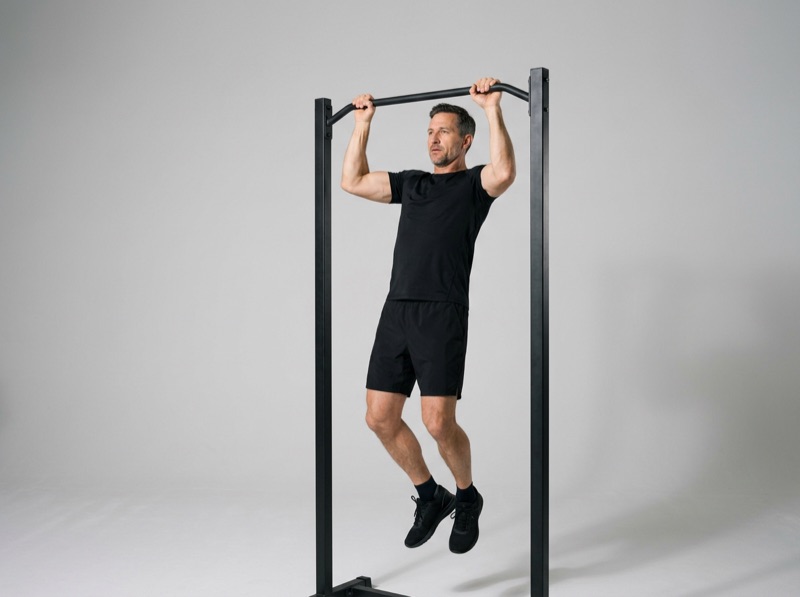
A negative pull-up trains only the lowering half of the pull-up. You jump or step up so your chin is above the bar, then lower yourself as slowly as you can. Muscles are stronger lowering a load than lifting it, so you can train the full pull-up range long before you can pull yourself up.
Muscles worked
Main: Upper back (latissimus dorsi), Biceps.
Also working: Mid-back (rhomboids, trapezius), Forearms and grip, Core.
How to do a negative pull-up
- Stand on a sturdy box, chair or step under the bar, so you can reach the top position easily.
- Grip the bar with your palms facing away, hands just wider than your shoulders.
- Step or jump up until your chin is over the bar, then take your feet off the support.
- Lower yourself slowly, aiming for 4–5 seconds until your arms are straight.
- Step back up and repeat. Rest between reps if you need to keep the lowering slow.
Form tips
- Jump to the top position
- Lower yourself over 4–5 seconds
- Full hang at the bottom
Common mistakes
Dropping quickly at the end
Most people control the top and fall through the bottom. Count out loud and keep it slow all the way to a full hang.
Doing too many
The lowering phase makes muscles sore. Start with 3 sets of 3–5 reps, two or three times a week.
An unstable step
Falling off the box is the real risk. Use something solid and keep it close to the bar.
Easier and harder versions
- Easier: Reverse snow angel
- Harder: Pull-up
How many to do
A good starting point is 3 sets of 5 reps, resting 60–90 seconds between sets. Stop each set 1–2 reps before your form breaks down. When every set feels easy, add a few reps, then move to a harder version.
Questions
How long until I can do a full pull-up?
It varies a lot. When you can lower yourself slowly for 5–8 seconds on several reps, try a full pull-up at the start of your next session.
Are negatives better than band-assisted pull-ups?
Both work. Negatives need no equipment besides the bar; bands help you practise the pulling half. Many plans use both.
General fitness information, not medical advice. Check with your doctor before starting if you have a health condition, an injury or are pregnant, and stop if an exercise causes pain.