What is calisthenics?
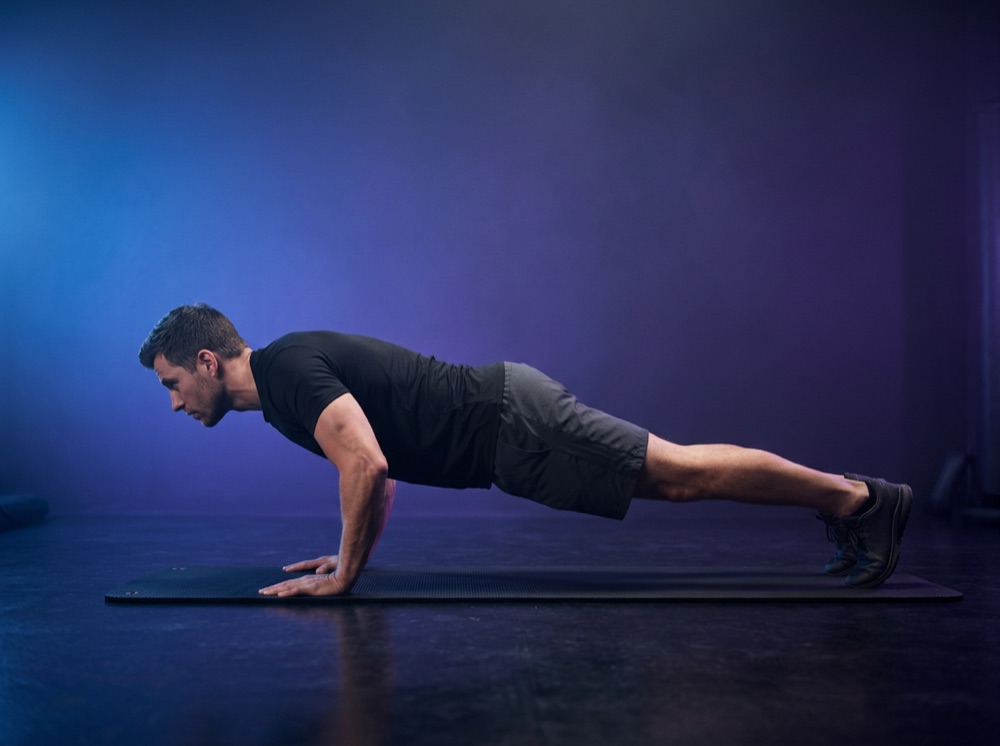
Calisthenics is strength training that uses your own bodyweight as the resistance: push-ups, squats, lunges, pull-ups, planks and the easier and harder versions of each. It builds strength, muscle, mobility and control together, and you can do it almost anywhere with little or no equipment.
By the MuscleOG team · Updated October 28, 2026
Where the word comes from
“Calisthenics” comes from two Greek words: kallos (beauty) and sthenos (strength). The idea is old: soldiers, gymnasts and school PE classes have trained this way for well over a century. What changed in recent years is how it is coached. Modern calisthenics plans use clear progressions, so the same movement pattern gets harder as you get stronger, much like adding weight to a barbell.
What counts as calisthenics
Almost any exercise where your body is the weight. Most plans are built on five basic movement patterns:
| Pattern | What it trains | Easier → harder |
|---|---|---|
| Push | Chest, shoulders, triceps | Incline push-up → Knee push-up → Push-up → Diamond push-up |
| Pull | Back, biceps, grip | Doorway row → Negative pull-up → Pull-up |
| Squat | Thighs, glutes | Sit-to-stand → Bodyweight squat → split squat → Jump squat |
| Hinge and bridge | Glutes, hamstrings, lower back | Glute bridge → single-leg bridge → single-leg deadlift |
| Core | Abs, obliques, lower back | Dead bug → plank → side plank → leg raise |
What calisthenics is good for
- Strength and muscle. Bodyweight moves build muscle when the sets are hard enough. A 2017 study (Kikuchi and Nakazato, Journal of Exercise Science & Fitness) found that push-ups and a moderate-weight bench press produced similar gains in chest muscle and strength over eight weeks.
- Training anywhere. A floor and, for pulling, a bar or a sturdy table is all you need, so there is no commute and no membership.
- Control and mobility. Holding your own body in a plank or a deep squat trains balance, joint control and range of motion along with strength.
- Meeting the health guidelines. The World Health Organization and the CDC recommend muscle-strengthening activity that works all major muscle groups on at least 2 days a week. A short full-body calisthenics session covers that.
The limits
Calisthenics is not perfect for everything. Legs get strong quickly, so after a while you need single-leg moves (split squats, step-ups) or added weight to keep progressing. Pulling exercises need something to pull on. And if your goal is to lift the most weight possible in a specific gym lift, you will need to practise that lift. For general strength, fitness and body shape, bodyweight training takes you a long way.
Calisthenics vs the gym
Both make you stronger when you train consistently and make the work harder over time. The gym makes it easy to add small amounts of weight; calisthenics adds difficulty by moving to harder variations and slowing the tempo down. Many people combine the two: bodyweight at home on busy days, weights when they can get to a gym.
Is calisthenics good for beginners?
Yes, because every exercise has an easier version. If a full push-up is too hard, a push-up with your hands on a chair is not. That makes calisthenics a good start after a long break, for older adults (with easier versions and more rest) and for anyone who does not want to train in a gym. If you have a medical condition, an injury or are pregnant, check with your doctor before starting.
A beginner calisthenics workout
Warm up for 3–5 minutes (marching on the spot, arm circles, hip circles). Then do the circuit below 2–3 times, resting 60–90 seconds between rounds. Stop each exercise 1–2 reps before your form breaks down.
| Exercise | Reps or time |
|---|---|
| Bodyweight squat | 10–15 |
| Incline push-up | 8–12 |
| Glute bridge | 12–15 |
| Superman hold | 20–30 seconds |
| Plank | 20–30 seconds |
Do it 2–3 times a week with a rest day in between. When every set feels easy, add a few reps, then move one step harder on that exercise.
How to keep progressing
- Add reps until you reach the top of the range (for example 15).
- Slow it down: take 3 seconds on the way down.
- Move to a harder variation and drop back to the bottom of the rep range.
Common questions
Can you build muscle with calisthenics alone?
Yes, as long as the sets are challenging and you keep making them harder over time, and you eat enough protein.
Can calisthenics help you lose weight?
Training helps, and muscle makes it easier to keep weight off, but how much you eat matters most for weight loss. Our free calorie calculator gives you a daily target.
How long until I see results?
Most beginners notice they can do more reps within 2–4 weeks; visible changes in the mirror usually take 8–12 weeks of consistent training and eating.
General fitness information, not medical advice. Check with your doctor before starting if you have a health condition, an injury or are pregnant, and stop if an exercise causes pain.