How to do a jump squat
A jump squat is a bodyweight squat that ends in a jump: you squat down, explode straight up, land softly and sink into the next rep. It builds leg power and raises your heart rate fast, which is why it shows up in fat-burning circuits. It is a high-impact move, so master the normal squat first.
Muscles worked
Main: Front of the thighs (quadriceps), Glutes, Calves.
Also working: Hamstrings, Core.
How to do a jump squat
- Stand with your feet shoulder-width apart and your arms by your sides.
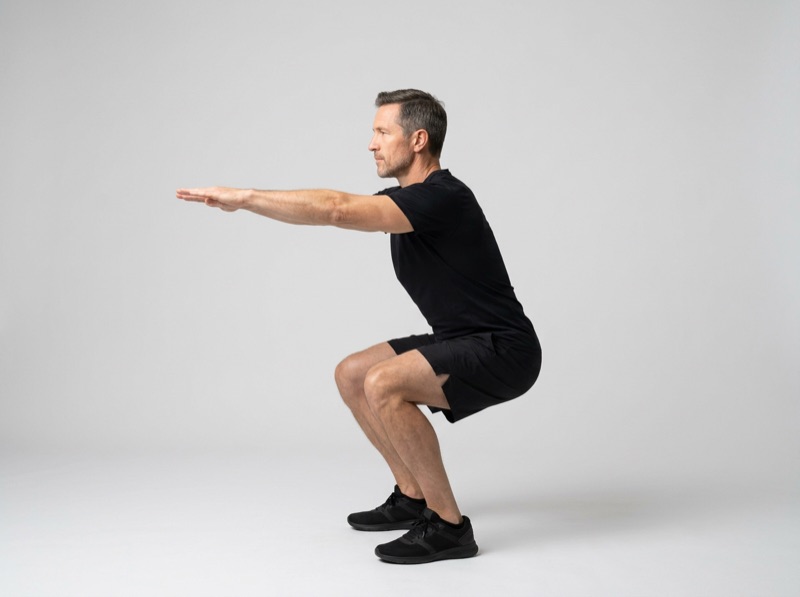
- Squat down to about half or parallel depth, swinging your arms back.
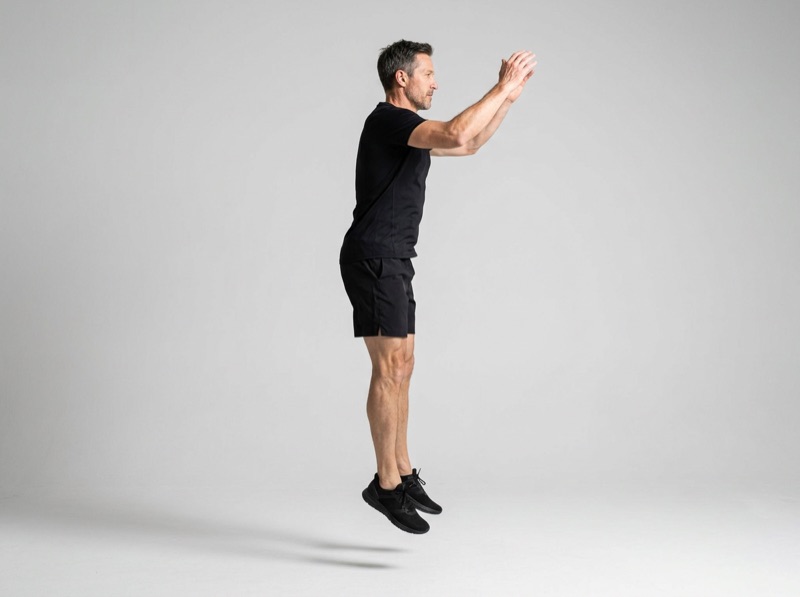
- Drive through your feet and jump straight up, swinging your arms forward and up.
- Land softly on the balls of your feet, then let your heels come down and your knees bend to absorb the landing.
- Go straight into the next squat. Reset between reps if your landings get noisy or stiff.
Form tips
- Squat down, explode up
- Land softly, sink into the next rep
- Arms help the jump
Common mistakes
Landing with straight legs
Stiff landings jar the knees and back. Land quietly with bent knees, as if landing on thin ice.
Knees collapsing inward on landing
Push your knees out over your toes on every landing. If you cannot control it, jump lower.
Doing too many when tired
Form breaks down fast with fatigue. Stop the set when the jumps lose height or the landings get loud.
Easier and harder versions
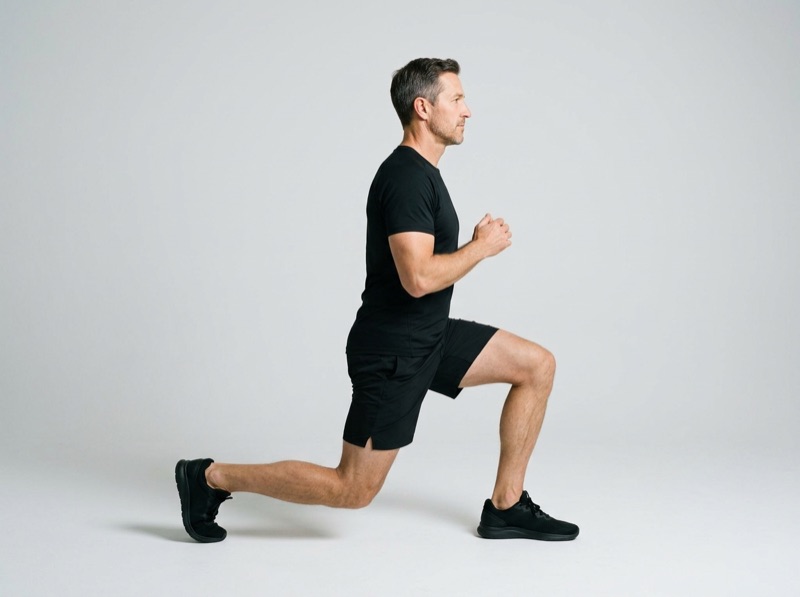
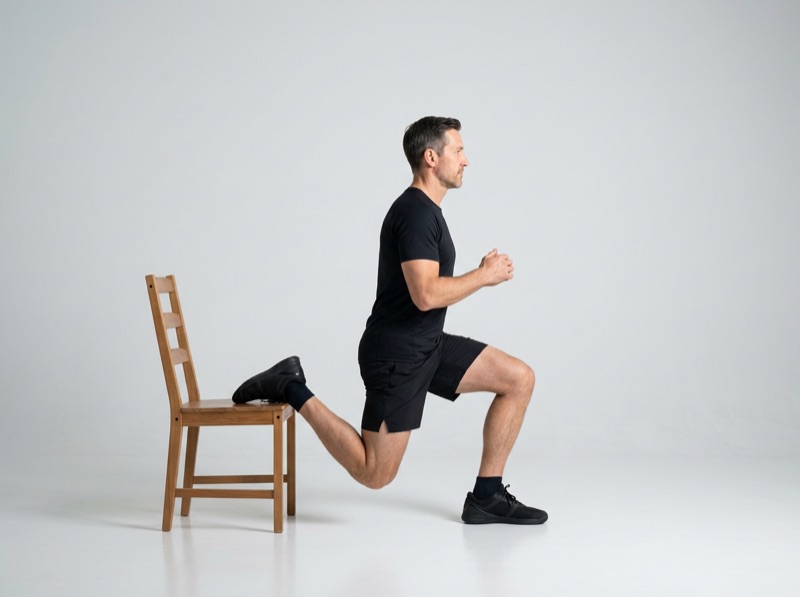
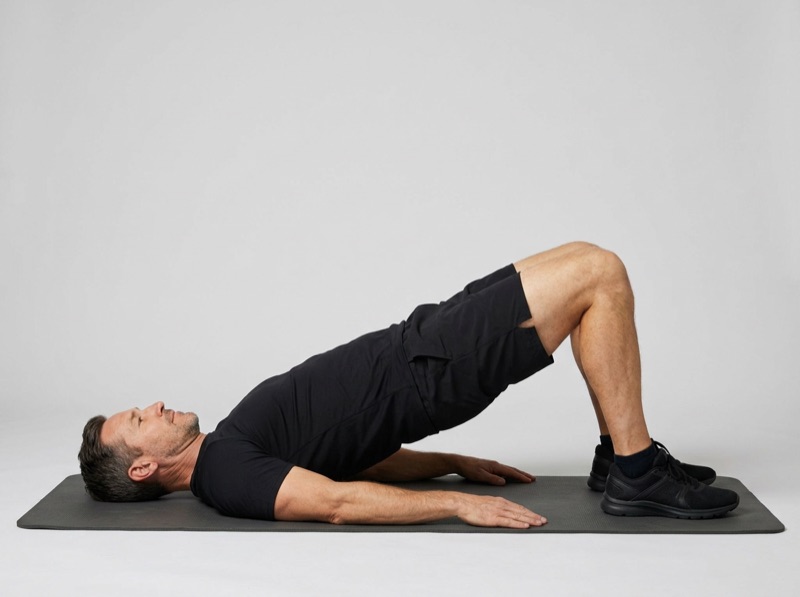
- Easier: Bodyweight squat
How many to do
A good starting point is 3 sets of 12 reps, resting 60–90 seconds between sets. Stop each set 1–2 reps before your form breaks down. When every set feels easy, add a few reps, then move to a harder version.
Questions
Are jump squats bad for your knees?
Healthy knees handle them well with soft, controlled landings. If you have knee pain, a low-impact alternative such as a fast bodyweight squat or a squat with a calf raise is a better choice.
Do jump squats burn fat?
They burn more calories per minute than regular squats because they are more intense, but fat loss mostly depends on your overall diet and activity.
General fitness information, not medical advice. Check with your doctor before starting if you have a health condition, an injury or are pregnant, and stop if an exercise causes pain.