How to do a reverse lunge
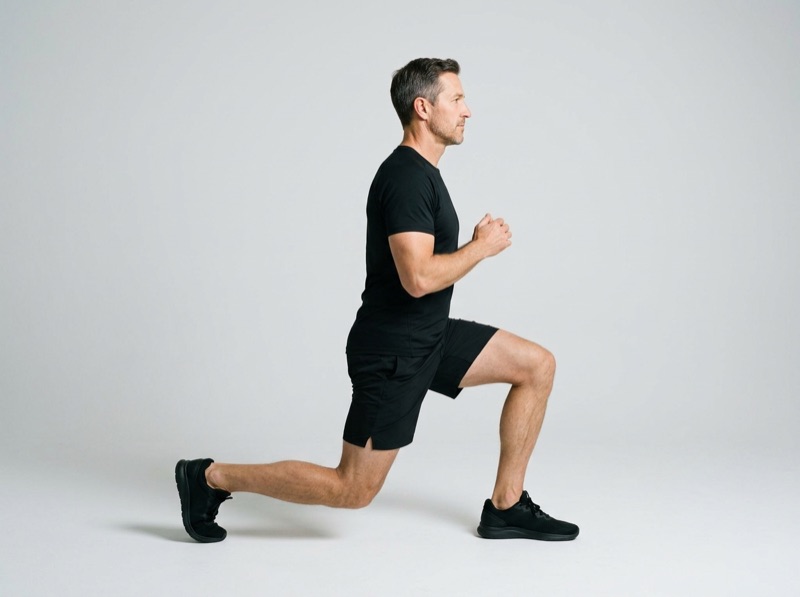
A reverse lunge is a step backward into a lunge: you lower your back knee toward the floor, then push through your front foot to return to standing. It trains each leg on its own, which builds balance and evens out strength between sides. Stepping back is easier on the knees than a forward lunge for most people.
Muscles worked
Main: Glutes, Front of the thighs (quadriceps).
Also working: Hamstrings, Inner thighs (adductors), Calves, Core (for balance).
How to do a reverse lunge
- Stand tall with your feet hip-width apart and your hands on your hips or in front of your chest.
- Take a big step back with one foot, landing on the ball of that foot.
- Bend both knees and lower your back knee until it is just above the floor. Keep your chest up and your front heel down.
- Push through the whole front foot to stand back up and bring your back foot forward to meet it.
- Repeat on the other leg, or finish all the reps on one side first.
Form tips
- Step back, lower back knee
- Front knee over ankle
- Alternate legs
Common mistakes
Stepping back too short
A short step pushes your front knee far forward and puts weight on your toes. Step back far enough that both knees can bend to about 90°.
Front knee caving in
Keep your front knee pointing the same way as your toes, over the middle of your foot.
Pushing off the back foot
The back leg is for balance. Drive up mostly through your front heel so the front leg does the work.
Easier and harder versions
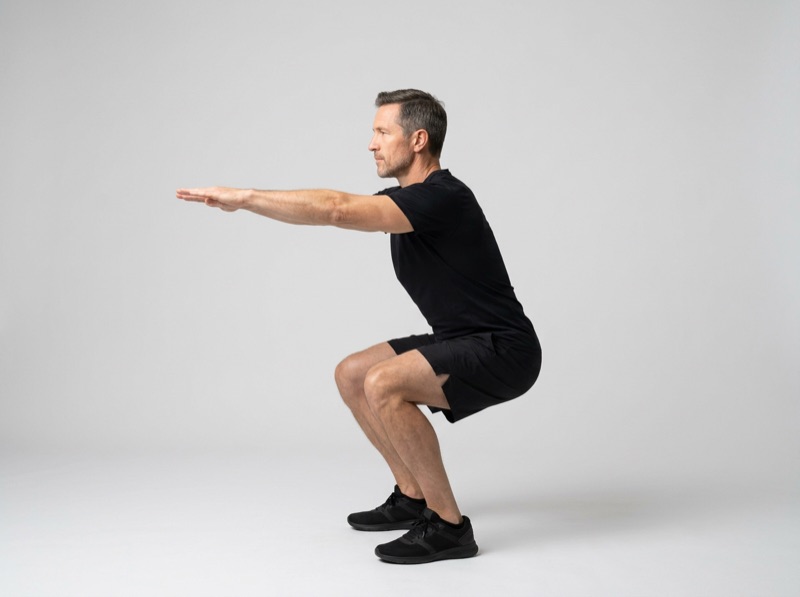
- Easier: Bodyweight squat
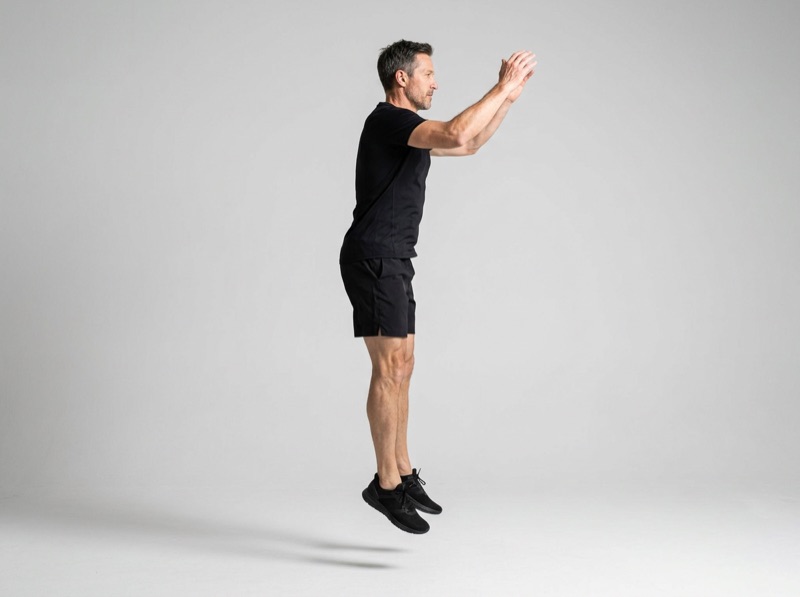
- Similar level: Skater jumps, Dumbbell reverse lunge
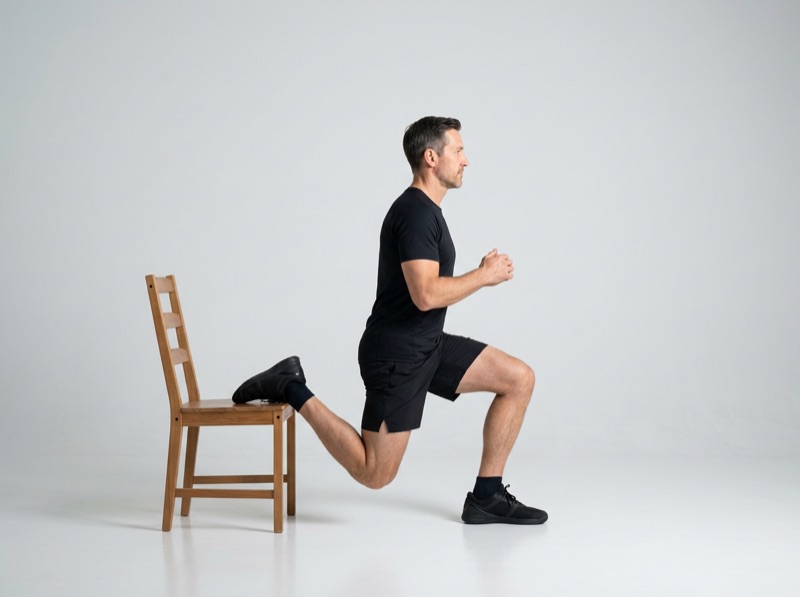
- Harder: Bulgarian split squat
How many to do
A good starting point is 3 sets of 10 reps, resting 60–90 seconds between sets. Stop each set 1–2 reps before your form breaks down. When every set feels easy, add a few reps, then move to a harder version.
Questions
Reverse lunge or forward lunge: which is better?
Both train the same muscles. Reverse lunges are easier to balance and gentler on the knees, so they are the better place to start.
How do I make reverse lunges harder?
Hold weights such as dumbbells or water bottles, slow the lowering down, or move on to a Bulgarian split squat.
General fitness information, not medical advice. Check with your doctor before starting if you have a health condition, an injury or are pregnant, and stop if an exercise causes pain.