How to do a Bulgarian split squat
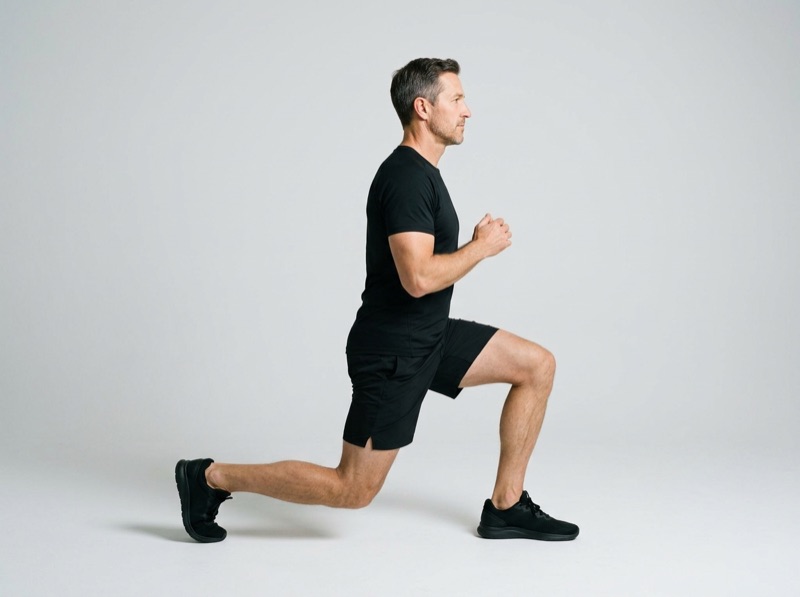
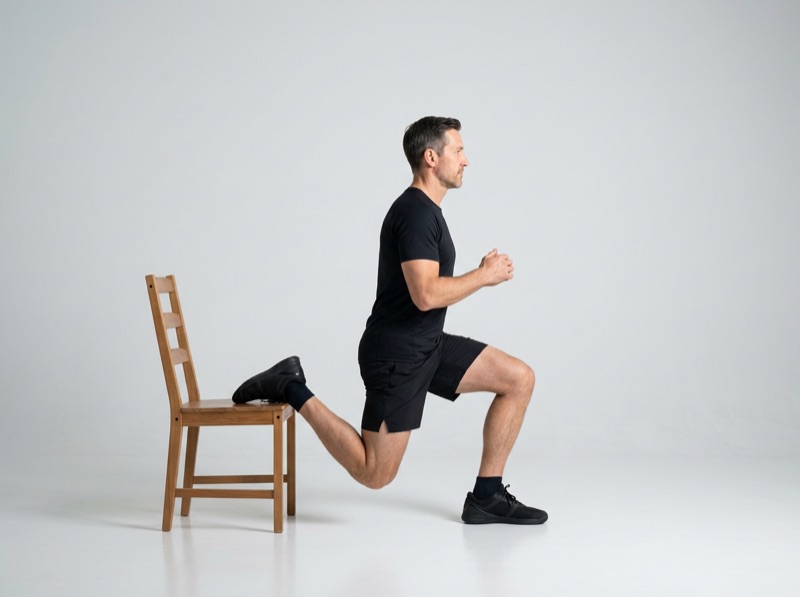
A Bulgarian split squat is a single-leg squat with your back foot resting on a chair or bench behind you. With most of your weight on one leg, it is one of the hardest bodyweight leg exercises, and the main way to keep your legs progressing without heavy weights. Build up to it with reverse lunges first.
Muscles worked
Main: Front of the thighs (quadriceps), Glutes.
Also working: Hamstrings, Inner thighs (adductors), Core and hips (for balance).
How to do a Bulgarian split squat
- Stand about two steps in front of a sturdy chair or bench, facing away from it.
- Reach one foot back and rest the top of that foot on the seat. Your front foot should be far enough forward that you can lower straight down.
- Keeping your chest up, bend your front knee and lower your back knee toward the floor.
- Go down until your front thigh is about parallel to the floor, or as low as you can with control.
- Push through your front foot, keeping most of the weight on the heel and midfoot, to stand back up. Finish all reps, then switch legs.
Form tips
- Back foot on a chair
- Lower straight down
- Front knee stays behind toes
Common mistakes
Front foot too close to the chair
If your front heel lifts or your knee shoots far forward, step your front foot further out.
Pushing off the back leg
The back foot only rests on the seat. If it is doing the work, lower the support or move your front foot forward.
Losing balance
Wobbling is normal at first. Hold a wall or door frame with one hand until your balance improves; the leg still does the work.
Easier and harder versions
- Easier: Reverse lunge
How many to do
A good starting point is 3 sets of 8 reps, resting 60–90 seconds between sets. Stop each set 1–2 reps before your form breaks down. When every set feels easy, add a few reps, then move to a harder version.
Questions
Why are Bulgarian split squats so hard?
Your front leg carries most of your bodyweight, roughly double what each leg handles in a normal squat, and your hips work hard to keep you balanced.
How high should the bench be?
About knee height. A lower step is easier; a higher seat stretches the front of the back hip more.
General fitness information, not medical advice. Check with your doctor before starting if you have a health condition, an injury or are pregnant, and stop if an exercise causes pain.