How to do a lying leg raise
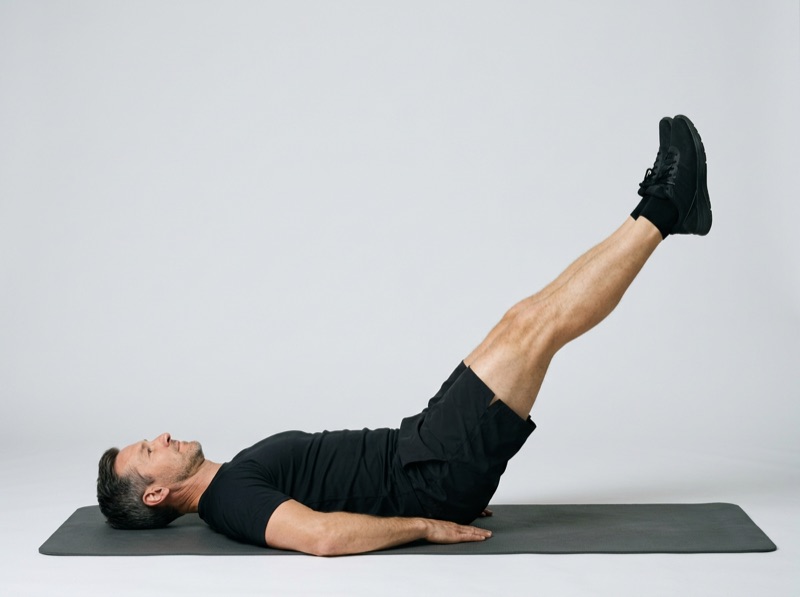
A lying leg raise is lifting your straight legs from the floor to vertical while lying on your back, then lowering them slowly without touching down. It trains the lower part of the abs and the hip flexors. It is harder than it looks, because your abs must keep your lower back from arching as the legs lower.
Muscles worked
Main: Six-pack muscle (lower part of rectus abdominis), Hip flexors.
Also working: Deep abs, Obliques.
How to do a lying leg raise
- Lie on your back with your legs straight and your hands flat under your hips or by your sides.
- Press your lower back gently toward the floor.
- Keeping your legs straight and together, lift them until they point at the ceiling.
- Lower them slowly, taking 2–3 seconds, and stop just above the floor or as soon as your lower back starts to arch.
- Lift again without resting your heels.
Form tips
- Hands under your hips
- Lift straight legs to vertical
- Lower without touching the floor
Common mistakes
Lower back arching
This shifts the strain onto the back. Stop the lowering higher up, or bend your knees.
Swinging the legs
Momentum takes over at the top and bottom. Keep it slow in both directions.
Lifting the head and straining the neck
Keep your head resting on the floor and your neck relaxed.
Easier and harder versions
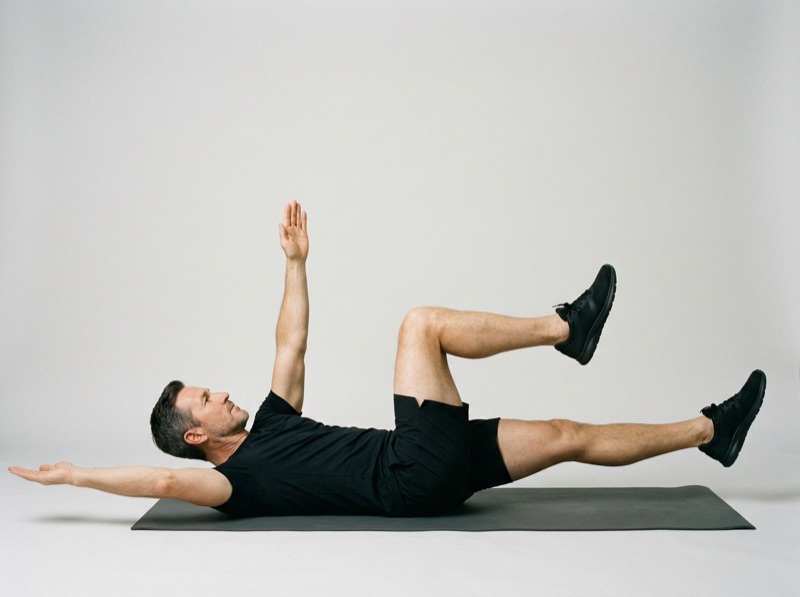
- Easier: Dead bug
How many to do
A good starting point is 3 sets of 10 reps, resting 60–90 seconds between sets. Stop each set 1–2 reps before your form breaks down. When every set feels easy, add a few reps, then move to a harder version.
Questions
Do leg raises work the lower abs?
They do train the lower part of the abs, along with the hip flexors. The abs are one long muscle, so you cannot isolate a part completely.
How do I make leg raises easier?
Bend your knees to 90° for bent-knee raises, or lower only as far as you can control.
General fitness information, not medical advice. Check with your doctor before starting if you have a health condition, an injury or are pregnant, and stop if an exercise causes pain.