How to do a dead bug
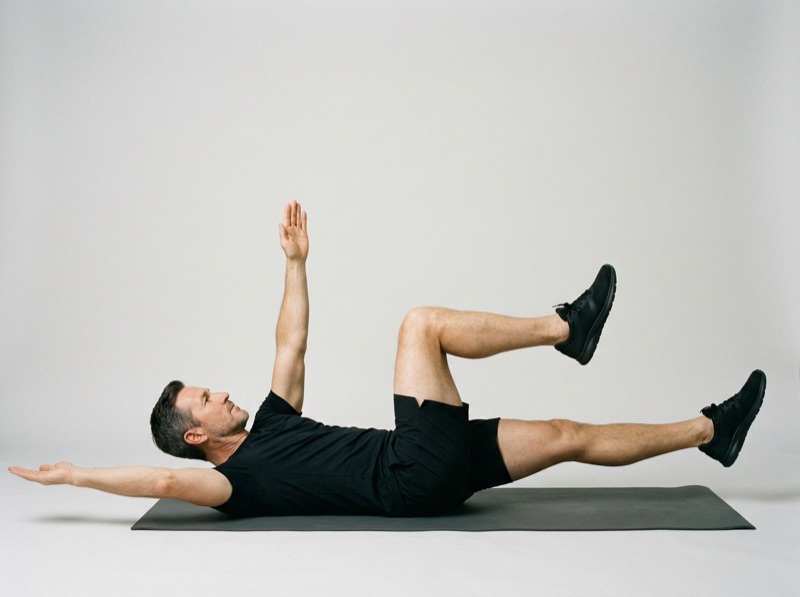
A dead bug is a core exercise done on your back: with your arms pointing up and knees bent above your hips, you slowly lower the opposite arm and leg toward the floor while keeping your lower back pressed down. It teaches your core to stay still while your limbs move, and it is gentle on the back.
Muscles worked
Main: Deep abs (transverse abdominis), Six-pack muscle (rectus abdominis).
Also working: Obliques, Hip flexors.
How to do a dead bug
- Lie on your back with your arms pointing straight up at the ceiling.
- Lift your legs so your knees are bent to 90° and stacked above your hips.
- Press your lower back gently into the floor and keep it there for the whole set.
- Slowly lower your right arm overhead and straighten your left leg toward the floor, stopping before your back lifts.
- Return to the start and repeat with the left arm and right leg. That is one rep per side.
Form tips
- Lower back pressed into the floor
- Extend opposite arm and leg
- Move slowly
Common mistakes
Lower back arching off the floor
This is the one thing to avoid. Shorten the movement and keep the leg higher until you can control it.
Moving too fast
Speed hides weakness. Take 2–3 seconds to lower and 2–3 to return.
Holding your breath
Breathe out as you lower the arm and leg; it helps keep the back down.
Easier and harder versions
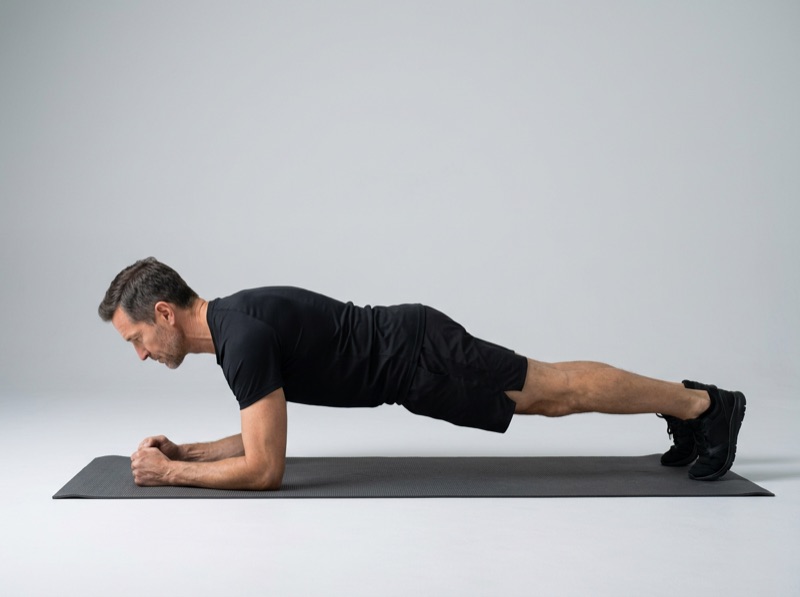
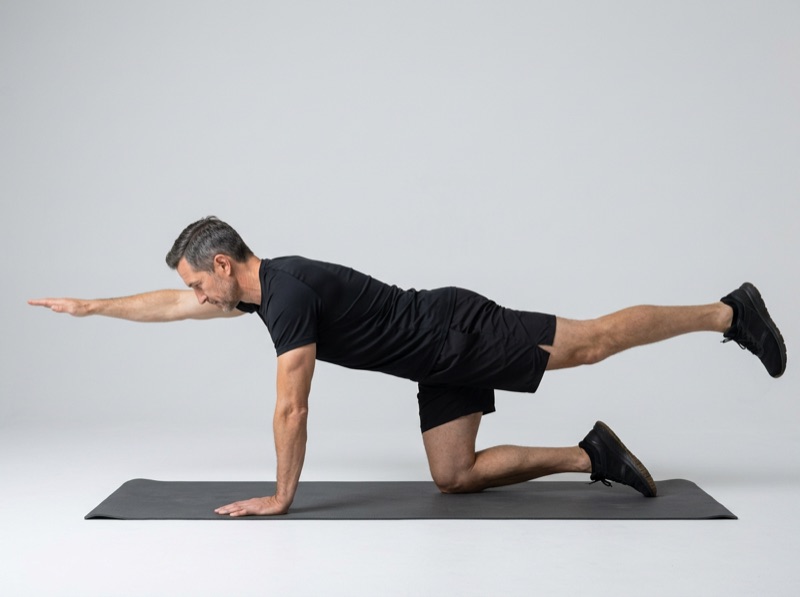
- Similar level: Bird dog, Plank, Standing knee crunch, Single-leg circles
- Harder: Bicycle crunch, Lying leg raise, Pilates hundred
How many to do
A good starting point is 3 sets of 12 reps, resting 60–90 seconds between sets. Stop each set 1–2 reps before your form breaks down. When every set feels easy, add a few reps, then move to a harder version.
Questions
Is the dead bug good for beginners?
Yes. It is one of the safest core exercises to start with and is often used in back-friendly programs.
How do I make the dead bug harder?
Move more slowly, hold the extended position for 2 seconds, or hold a light weight in your hands.
General fitness information, not medical advice. Check with your doctor before starting if you have a health condition, an injury or are pregnant, and stop if an exercise causes pain.