How to do a mountain climber
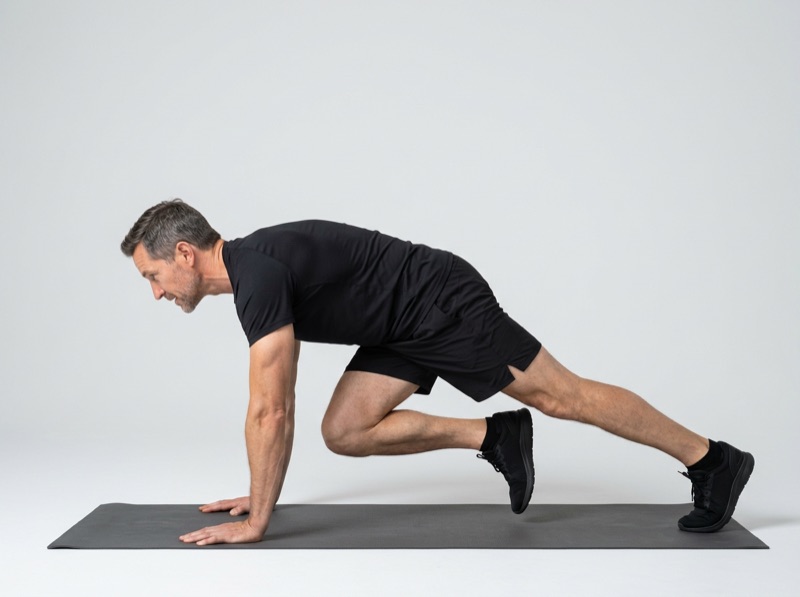
Mountain climbers are driving your knees toward your chest one at a time, at a running pace, while holding a high plank. They combine core strength and cardio, so your heart rate rises quickly, which is why they are a favourite in short fat-burning circuits.
Muscles worked
Main: Core (abs), Hip flexors, Shoulders.
Also working: Front of the thighs, Chest and triceps (holding the plank), Heart and lungs.
How to do a mountain climber
- Start in a high plank: hands under your shoulders, body straight from head to heels.
- Brace your core and drive your right knee toward your chest.
- Return the right foot to the start while driving the left knee forward.
- Keep switching legs at a steady, quick rhythm, as if running in place.
- Keep your hips level with your shoulders the whole time.
Form tips
- High plank position
- Drive knees toward chest
- Keep hips low
Common mistakes
Hips bouncing up and down
Keep your hips low and still, in line with your shoulders. Slow down if they start to rise.
Shoulders behind the hands
Keep your shoulders stacked over your wrists so your arms carry your weight well.
Only tapping the toes
Bring each knee well forward under your chest for the full benefit.
Easier and harder versions
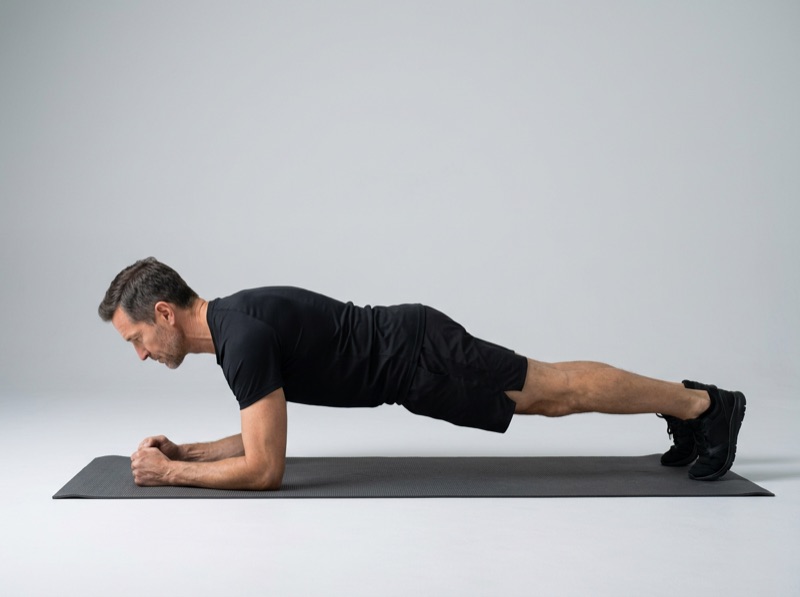
- Easier: Plank
How many to do
A good starting point is 3 rounds of 30 seconds, resting 60–90 seconds between sets. Stop each set 1–2 reps before your form breaks down. When every set feels easy, add a few seconds, then move to a harder version.
Questions
Are mountain climbers cardio or strength?
Both. Done fast, they raise your heart rate; done slowly with control, they are a core strength exercise.
How can I make mountain climbers easier?
Put your hands on a bench or chair, and step each foot forward instead of driving it quickly.
General fitness information, not medical advice. Check with your doctor before starting if you have a health condition, an injury or are pregnant, and stop if an exercise causes pain.