How to do a single-leg glute bridge
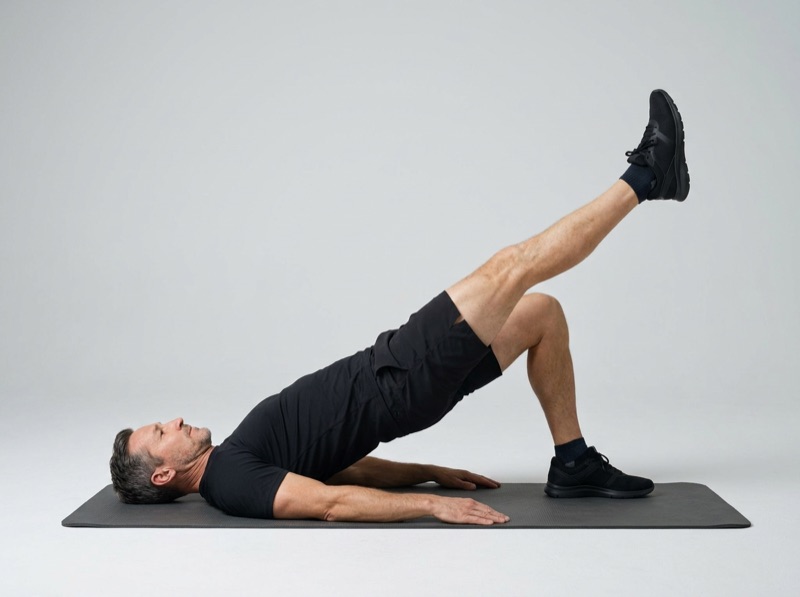
A single-leg glute bridge is a glute bridge done with one foot on the floor and the other leg lifted. Each side lifts your hips on its own, which roughly doubles the load on the working glute and shows up any difference between your left and right side. It is the next step once regular bridges are easy.
Muscles worked
Main: Glutes.
Also working: Hamstrings, Hip stabilisers (gluteus medius), Core.
How to do a single-leg glute bridge
- Lie on your back with your knees bent and feet flat, then straighten one leg so it points up at an angle, in line with the other thigh.
- Press your arms into the floor beside you for balance.
- Push through the heel of the planted foot and lift your hips until your body forms a straight line from shoulders to knee.
- Keep both sides of your pelvis level at the top and squeeze for a second.
- Lower slowly. Finish all reps on one side, then switch.
Form tips
- One foot planted, other leg straight
- Drive hips up
- Keep hips level
Common mistakes
Hips tilting to one side
If the hip on the lifted-leg side drops, the move gets easier and less useful. Lift lower and keep your belt line level.
Arching the back
Stop at a straight line and keep your ribs down.
Rushing the reps
Momentum takes the work off the glute. Lift in 1 second, pause, lower in 2.
Easier and harder versions
- Easier: Glute bridge
How many to do
A good starting point is 3 sets of 10 reps, resting 60–90 seconds between sets. Stop each set 1–2 reps before your form breaks down. When every set feels easy, add a few reps, then move to a harder version.
Questions
Why is one side harder than the other?
Most people have a stronger side. Start each set with your weaker side and do the same number of reps on both.
Should I feel it in my hamstring?
A little is normal. If it cramps, bring your heel closer to your hips.
General fitness information, not medical advice. Check with your doctor before starting if you have a health condition, an injury or are pregnant, and stop if an exercise causes pain.