How to do a sit-to-stand
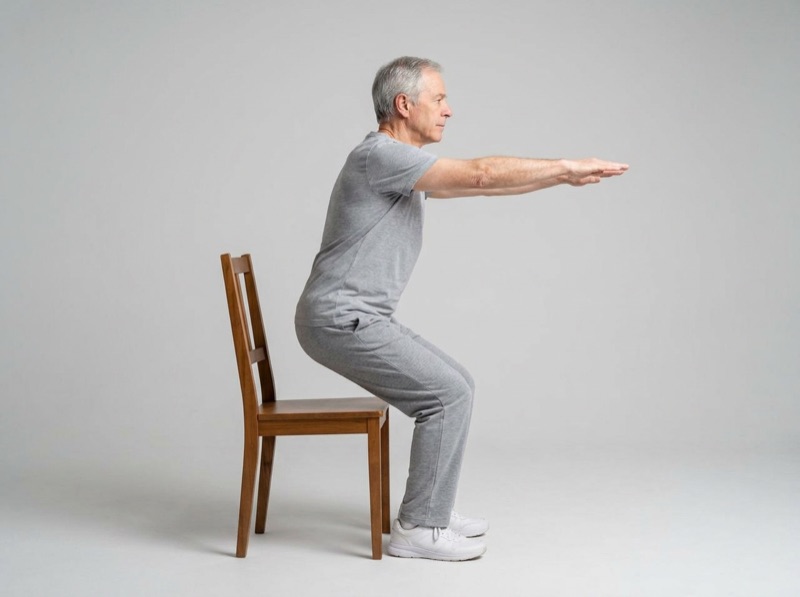
A sit-to-stand is standing up from a chair and sitting back down without using your hands. It trains the same muscles as a squat with a chair as a safety stop, so it is a good first leg exercise for beginners and older adults, and it builds the strength you use every time you get up.
Muscles worked
Main: Front of the thighs (quadriceps), Glutes.
Also working: Hamstrings, Core, Calves.
How to do a sit-to-stand
- Sit near the front edge of a sturdy chair that cannot slide, with your feet flat and hip-width apart.
- Cross your arms over your chest, or hold them out in front of you.
- Lean forward slightly from the hips, then push through your feet to stand up fully.
- Stand tall for a moment, squeezing your glutes.
- Sit back down slowly, taking 2–3 seconds, and touch the seat lightly before the next rep.
Form tips
- Feet hip-width, arms crossed
- Stand up without using hands
- Sit down slowly with control
Common mistakes
Dropping into the chair
Falling into the seat skips the most useful part. Lower with control all the way.
Knees caving in
Keep your knees in line with your toes as you stand.
Using the hands
Use your hands on the armrests only if you need to at first, then work toward standing without them.
Easier and harder versions
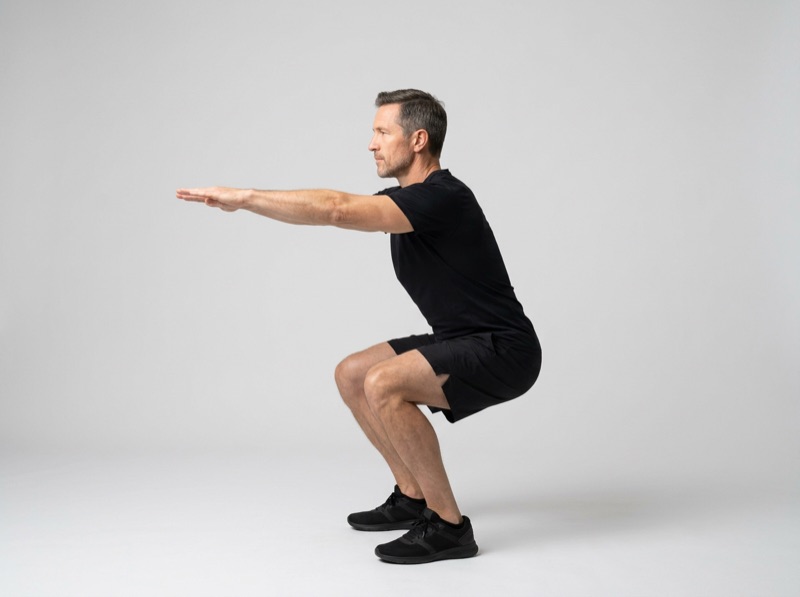
- Similar level: Seated knee lift, Bodyweight squat
- Harder: Single-leg sit to stand
How many to do
A good starting point is 3 sets of 10 reps, resting 60–90 seconds between sets. Stop each set 1–2 reps before your form breaks down. When every set feels easy, add a few reps, then move to a harder version.
Questions
Is sit-to-stand good for seniors?
Yes. It is one of the most useful strength exercises for older adults, because it trains getting up from a chair, toilet or car.
How do I make it harder?
Use a lower chair, slow the lowering down, hold a weight, or stop just above the seat without touching it. Then move on to the bodyweight squat.
General fitness information, not medical advice. Check with your doctor before starting if you have a health condition, an injury or are pregnant, and stop if an exercise causes pain.