How to do a wall sit
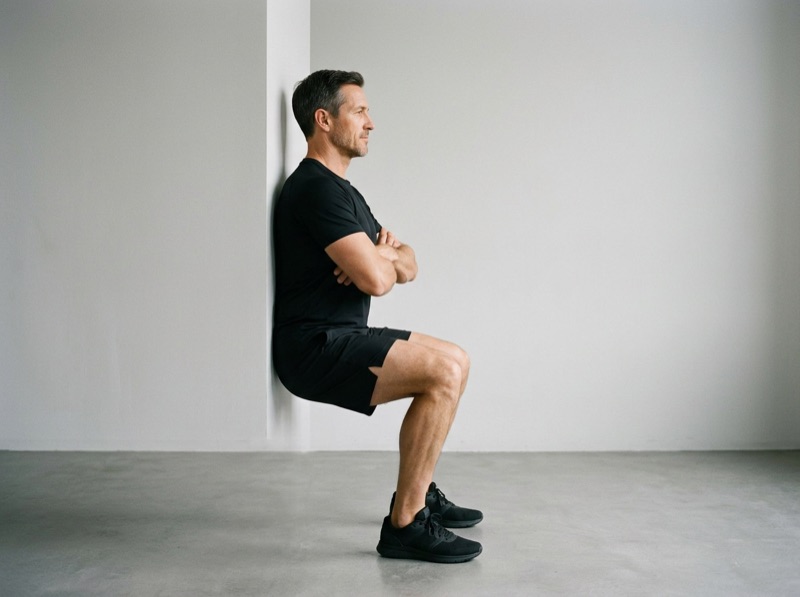
A wall sit is holding a seated position against a wall with no chair: your back is flat on the wall and your thighs are parallel to the floor. It is an isometric exercise, meaning the muscles work without moving, and it builds endurance in the thighs with no impact on the joints.
Muscles worked
Main: Front of the thighs (quadriceps).
Also working: Glutes, Calves, Inner thighs (adductors).
How to do a wall sit
- Stand with your back against a wall and your feet about hip-width apart, roughly two foot-lengths away from it.
- Slide your back down the wall, bending your knees.
- Stop when your thighs are parallel to the floor and your knees are above your ankles, bent to about 90°.
- Keep your back and head against the wall and your weight in your heels. Breathe steadily.
- Hold for the target time, then slide back up the wall.
Form tips
- Back flat against the wall
- Thighs parallel to the floor
- Breathe steadily
Common mistakes
Knees in front of the toes
Your feet are too close to the wall. Walk them out until your shins are vertical.
Holding your breath
Breathing out slowly helps you hold longer and keeps your blood pressure from spiking.
Resting hands on the thighs
Pushing on your legs takes weight off them. Keep your arms crossed or by your sides.
Easier and harder versions
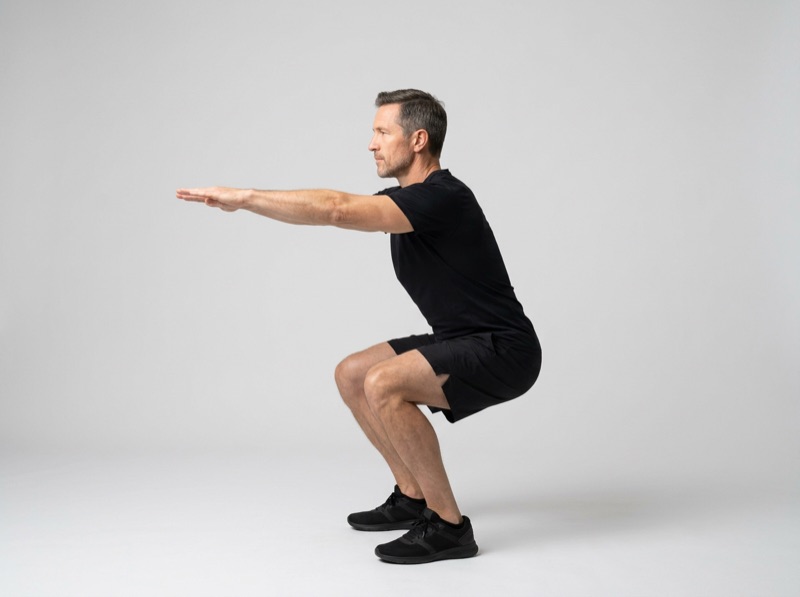
- Similar level: Bodyweight squat
How many to do
A good starting point is 3 rounds of 30 seconds, resting 60–90 seconds between sets. Stop each set 1–2 reps before your form breaks down. When every set feels easy, add a few seconds, then move to a harder version.
Questions
How long should I hold a wall sit?
Start with 20–30 seconds for 3 rounds. Add 10 seconds when the last round feels manageable; 60 seconds is a good target.
Are wall sits safe for bad knees?
Often, yes, because there is no movement or impact. Sit higher than 90° if your knees are sensitive, and stop if it hurts.
Is a wall sit safe with high blood pressure?
Long isometric holds can raise blood pressure while you hold them. If you have high blood pressure, ask your doctor first and never hold your breath.
General fitness information, not medical advice. Check with your doctor before starting if you have a health condition, an injury or are pregnant, and stop if an exercise causes pain.